Domain-Specific Harnesses: Are They the New GPT Wrappers or Here to Stay?
Explore what domain-specific AI harnesses are, why they are replacing GPT wrappers, and how they form a permanent business model shift for software founders.
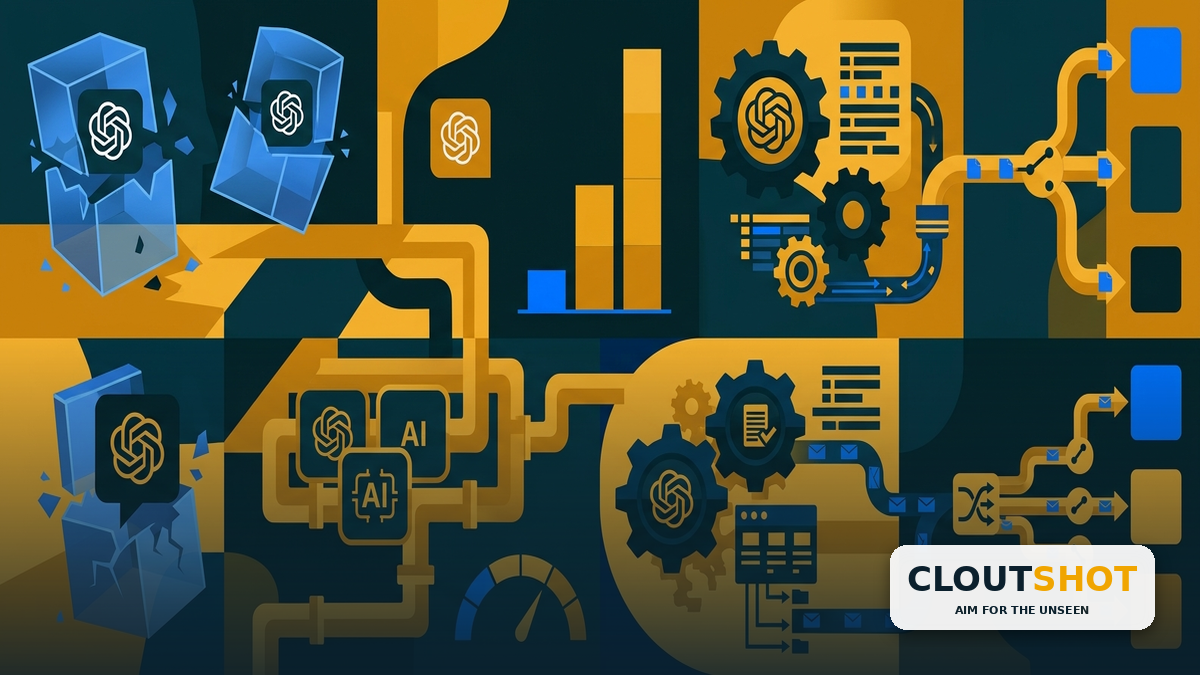
Domain-specific AI harnesses are the new structural layer for software, moving beyond thin prompt wrappers into durable runtime architectures that manage multi-step loops, tool routing, memory persistence, and safety guardrails. Rather than a passing fad, they represent a permanent business model shift where value concentrates in vertical workflow logic.
The Evolution Beyond the GPT Wrapper
In the early days of generative AI, software builders rushed to deploy thin GPT wrappers. These products added a simple user interface or a prompt library on top of raw foundation model APIs. As frontier labs rapidly improved their native chat products, those thin layers were quickly commoditized and crushed.
Yet the market has pivoted from dismissing wrappers to recognizing a more powerful engineering construct: the agent harness. As defined in recent technical literature, a harness is the complete software architecture wrapped around a large language model that manages context, tool dispatch, session state, and execution loops [Parallel, 2026]. Rather than just formatting a single prompt, a harness keeps a model running step by step, handling errors, managing memory across sessions, and executing actions in the real world.
Why Harnesses Drive Defensible Business Models
The distinction between models and harnesses is now quantified by hard data. According to Stanford research highlighted by analysts like Jamin Ball, changing the harness around a fixed model can produce up to a 6x performance gap on identical benchmarks [Clouded Judgement, 2026]. The model supplies raw reasoning, but the harness provides the operational environment.
This reality has reshaped early-stage tech investing. In recent Y Combinator batches, founders are largely bypassing traditional SaaS architecture to build domain-specific harnesses that handle complex vertical execution [X Trending, 2026]. As YC's Garry Tan noted, companies either die as traditional systems of record or live long enough to become domain-specific harnesses.
The Anatomy of a Production Harness
A production-grade harness consists of several core components that insulate the application from model volatility:
Context Engines: Dynamically pull relevant data from enterprise systems of record just-in-time, preventing context rot and token bloat [Aviso, 2026].
Tool Routers: Manage secure access to APIs, databases, and file systems through standards like the Model Context Protocol (MCP) [Masood, 2026].
Execution Loops & Evals: Enforce Plan-Execute-Verify (PEV) phases to catch errors before they cascade through multi-step workflows [Masood, 2026].
Safety & Policy Layers: Implement human-in-the-loop approval gates and role-based access controls for high-risk actions [Aviso, 2026].
Because these systems abstract the underlying model, founders can swap out foundation models as capabilities evolve without rewriting their proprietary business logic or losing their accumulated workflow history.
The Economic Shift: Selling Completed Work
The business model for harness-driven software is moving away from traditional per-seat SaaS subscription pricing toward outcome pricing. When an AI agent reliably executes a multi-step workflow—such as processing insurance claims, reconciling accounts, or resolving IT support tickets—vendors can charge directly per completed unit of work, competing directly with enterprise labor budgets and BPO spend [Zeniteq, 2026].
As LayerX CEO Yoshinori Fukushima notes, customers are ultimately buying an AI managed service—a complete package of agent reasoning, domain harness, and deterministic code that delivers a finished operational product rather than raw infrastructure [Fukushima, 2026].
Operator Playbook
- Decouple the Brain from the Rails: Never hardcode your business logic into a specific model's prompt format. Build your routing and tool integrations independently so you can swap foundation models as pricing and performance shift.
- Master Environment Legibility: Do not rely on giant context injections. Structure your databases and internal APIs so agents can easily navigate your workspace without burning tokens on blind searches.
- Gate Every High-Risk Action: Implement explicit human-in-the-loop approval checkpoints before your harness executes irreversible operations or publishes external artifacts.
Frequently Asked Questions
What is the difference between a GPT wrapper and an agent harness?
A GPT wrapper is a thin interface that passes a single prompt to an LLM and returns the text response. An agent harness is a comprehensive runtime infrastructure that runs models in multi-step loops, manages long-term memory, executes tools securely, handles error recovery, and enforces operational guardrails.
Can I build a domain-specific harness in-house using tools like Claude Code?
Yes, individual engineers can build custom harnesses using modern developer tools. However, the decision comes down to economic rationality. Maintaining continuous improvement loops, updating security protocols, and managing evaluation suites require ongoing engineering overhead that often makes specialized managed services more cost-effective.
Do foundation model providers threaten domain-specific harnesses?
While labs like Anthropic and OpenAI provide general-purpose managed agent SDKs, they do not possess your company's proprietary exception histories, vertical data graphs, or domain-specific workflows. The durable moat lives in the operational knowledge encoded inside the harness.
Sources & References
[Parallel] - "What is an agent harness?" (https://parallel.ai/articles/what-is-an-agent-harness) [Clouded Judgement] - "Long Live the Harness (Wrapper?) !" (https://cloudedjudgement.substack.com/p/clouded-judgement-41026-long-live) [Zeniteq] - "AI Agent Harnesses Are the New GPT Wrappers" (https://www.zeniteq.com/ai-agent-harnesses-are-the-new-gpt-wrappers-81mxuh) [MindStudio] - "What Is the Harness vs Model Distinction? Why Your Agent Wrapper Matters More Than Benchmarks" (https://www.mindstudio.ai/blog/harness-vs-model-distinction-agent-wrapper) [Aviso] - "Your AI Agent Has a Model. What It Really Needs Is a Harness." (https://www.aviso.com/blog/ai-agent-harness) [Note] - "Agent Harnesses and AI Managed Services" by Yoshinori Fukushima (https://note.com/fukkyy/n/n1d8fce44e67a) [X Trending] - "Domain-Specific AI Agent Harnesses Reshape YC Startups" (https://x.com/i/trending/2098769645557649890) [Medium] - "Agent Harness Engineering — The Rise of the AI Control Plane" by Adnan Masood, PhD. (https://medium.com/@adnanmasood/agent-harness-engineering-the-rise-of-the-ai-control-plane-938ead884b1d)